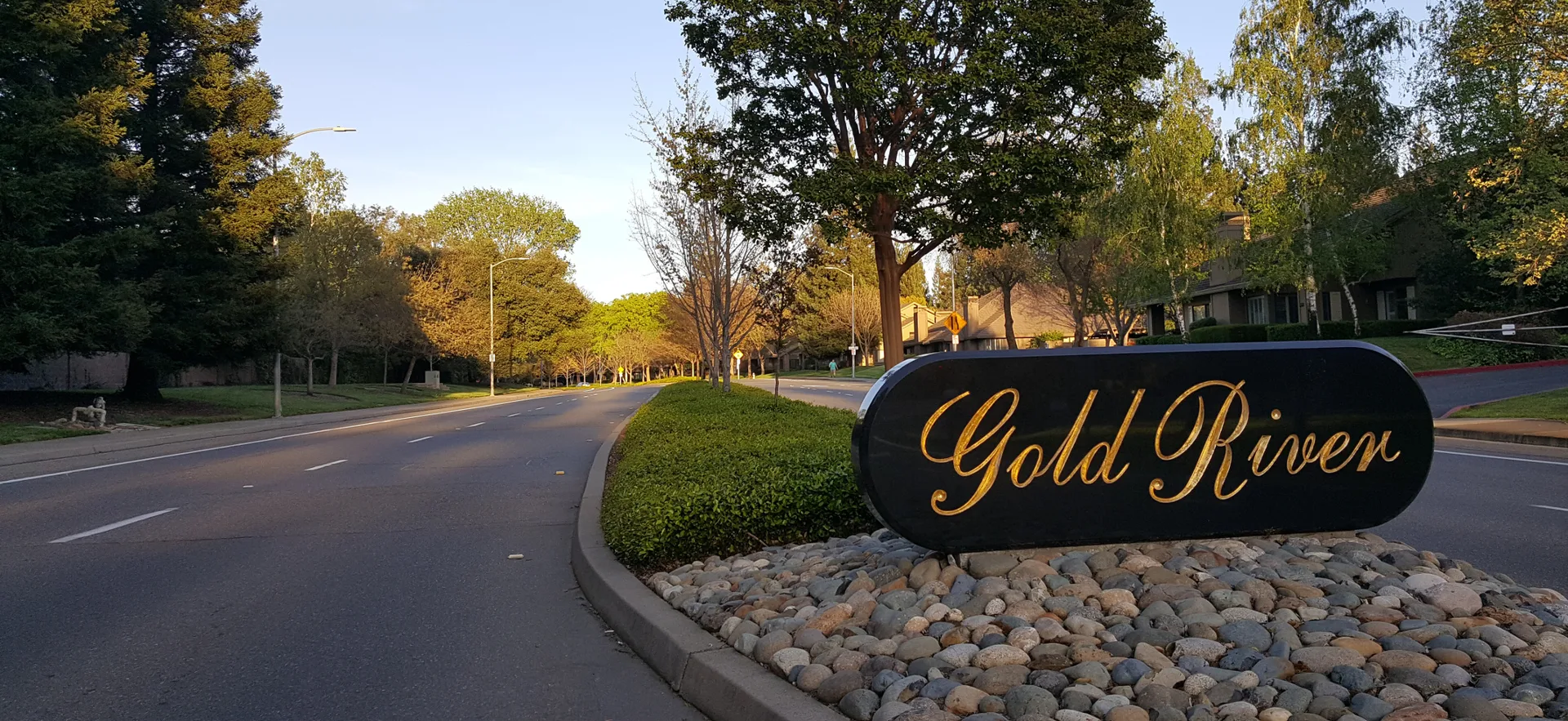
Neighborhood Guide · Sacramento County
Gold River, Sacramento County
The understated master-planned enclave minutes from downtown, built around the club, the trails, and the river.
Gold River is a community that I would recommend to, well, anyone. It may be my favorite self-contained community in the region with a lot to offer. Over 2700 homes, it is manicured, clean, has excellent schools with a great elementary dedicated in the center of the community, and miles of greenbelts with walking biking trails. Also there's a private racquet club with 27 courts, 2 pools, spa and work-out, training facilities, a shopping center, a wide variety of homes and all located on the American River. The American River Bike Trail connects to Gold River through its own trail system and runs from Folsom to downtown Sac, with bikers using it for commute and recreation.
Gold River also has one of the most stable, ever increasing real estate markets in the region and has weathered the worst of the last 40 years of market downturns with flying colors, while excelling in the good times. This guide covers its character, what it offers, and the trade-offs people rarely hear about.
What It's Like to Live Here
A Complete Community - The Total Package
Gold River is mature and manicured. Unlike newer master plans, the trees here have had decades to fill in, which gives every street a wooded, established feel. The Gold River Club anchors the social life, the greenbelts wind through the middle of the community, and the American River Parkway sits along the southern edge for trails that connect all the way to downtown Sacramento.
It suits professionals who want the suburb without the long drive, empty nesters who want the club and the community, and families who want a safe, organized place with good schools (San Juan Unified serves the community, with the campus depending on your address). If you want a big custom home on acreage, go to Granite Bay. If you want a perfect, low-maintenance, close-in package, Gold River is hard to beat.
An Insider's tip:
The greenbelt paths intertwined throughout the neighborhood and from the Town Center to the American River are not just a bullet point on a brochure. They're awesome and beautiful. The day after I moved to GR, I ventured out on the trails, with kids and dogs, and it became part of my life. Walk to the club, to the coffee shop, the restaurant, the river. Peaceful, calming, relaxing, and such a great way to unwind... and meet your neighbors.
Vibe & Atmosphere
The Unmistakable Gold River Vibe
Gold River is truly unique, a special community, unlike any master-planned community I've seen, and for many reasons. Its whole feel flows from the vision of one person, so to understand the vibe here you first need to understand the man, and the one big idea he put into every street, greenbelt, and roofline.
The Visionary & the 1983 Launch
Gold River is the brainchild of the visionary developer and builder Robert Powell, whose homes and neighborhoods are unmistakable. Over many years he experimented and perfected his style, and in the process he built a cult-like following of homeowners, one that supplies a constant stream of ready buyers for his homes.
The concept and plans actually started many years before, but Gold River came online in approximately 1983 to much fanfare. Long lines of potential buyers wrapped around the neighborhood for a chance to get on the list.
The reason for those lines was a genius move by Powell, and it was all about the schools. He rejected the idea of incorporating into a city, and used his influence instead to get Gold River residents into the San Juan School District, and most importantly its top high school, Rio Americano, plus the promise of a new elementary school to be built right in Gold River. He pulled it off even though Gold River is geographically connected to Rancho Cordova, with lesser rated schools, sits across the river from the San Juan District, and is roughly 12 miles from the high school. The long built-out neighborhoods of Carmichael and Fair Oaks, buyers who had yearned for a new home opportunity inside that school district, poured in. They camped in line along with the rest, waiting to buy.
25 Villages, Greenbelts & "Nature and Space"
Most subdivisions take a grid, modify it to the landscape, and try to squeeze as many lots per acre in for profit. Powell's brilliant design went the other way: 25 circular individual "villages", connected only by a couple of common roads, and all joined together by beautiful, natural, tree-filled greenbelts.
The greenbelts run 30 to as much as 100 feet wide, and each one holds a wide bike and walking path in the middle that wraps around the village and winds throughout the neighborhood, eventually leading to the town center or to the American River. When you walk there, you feel like you're in a park, complete with deer, wildflowers, the occasional coyote, and an assortment of other "critters". Along the way there are two large parks where peewee soccer and volleyball matches break out, and the streets themselves are extra wide, tree-lined, with medians and large, treed, grassy buffer strips separating the road from the village backyards.
Put it all together and you get Powell's vision of "nature and space". Word of mouth has it that many of his design concepts about space and nature, for neighborhoods and for homes, came back with him from his many trips to Japan, and it's a concept he sold very well. It works, and it works beautifully.
Every Home Brown, Indistinguishable from the Street
His homes are unmistakable; you can spot a Powell from a mile away, and it's not simply the style. In the middle of a Powell neighborhood every home looks the same, because every home is brown. The funny thing I always point out to clients, with a chuckle, is that there are actually four slightly differing shades of brown, and if you look, you can see them: a tan brown, a slightly darker tan, an olive brown, and a grey-brown. At first glance, though, you don't notice it at all.
Add in the weird one: because of the roofline and the elevation design, you can't tell a one-story from a two-story from the street. I'm not kidding. Only a trained eye can spot the markers. The landscaping everywhere is maintained by the association, with only approved designs and approved plants, so the yards all look exactly alike. I laugh with clients that it's like the old movie The Stepford Wives, where every home and family ends up exactly the same.
And because of the strictly enforced CC&Rs, you can't park in the driveways or on the street, which is also owned and maintained by the association, so the pristine, clean, almost sterile look is always present in the Powell villages. Honestly, I know every inch of Gold River, and I've driven over to a friend's house for a party and walked up to the wrong one several times. For some coming from near and far who have never seen anything like it, it takes a while to understand, but it all falls back on his one idea: the homes should blend in with nature and not stand out.
He was also a big believer in redwood trees; he had them planted seemingly by the thousand, and now they're everywhere and fully mature. The nature thing again.
Inside, Ahead of Its Time
That's where the similarity and the continuity end: at the front door. His interior designs were way ahead of their time, and they prove to be timeless: floor plans that are open, large rooms, especially the bedrooms, big, well-designed kitchens, and a wall of huge windows that bring your backyard oasis into your home.
Whether it was built in the 1980s or in the newer villages of the late 1990s, the floor plans lend themselves to absolutely gorgeous remodels and makeovers. Open a wall here, remodel a kitchen there, update the flooring and the cabinets, and wow. Combined with the wall of windows and the open floor plan, you have an entertainer's dream.
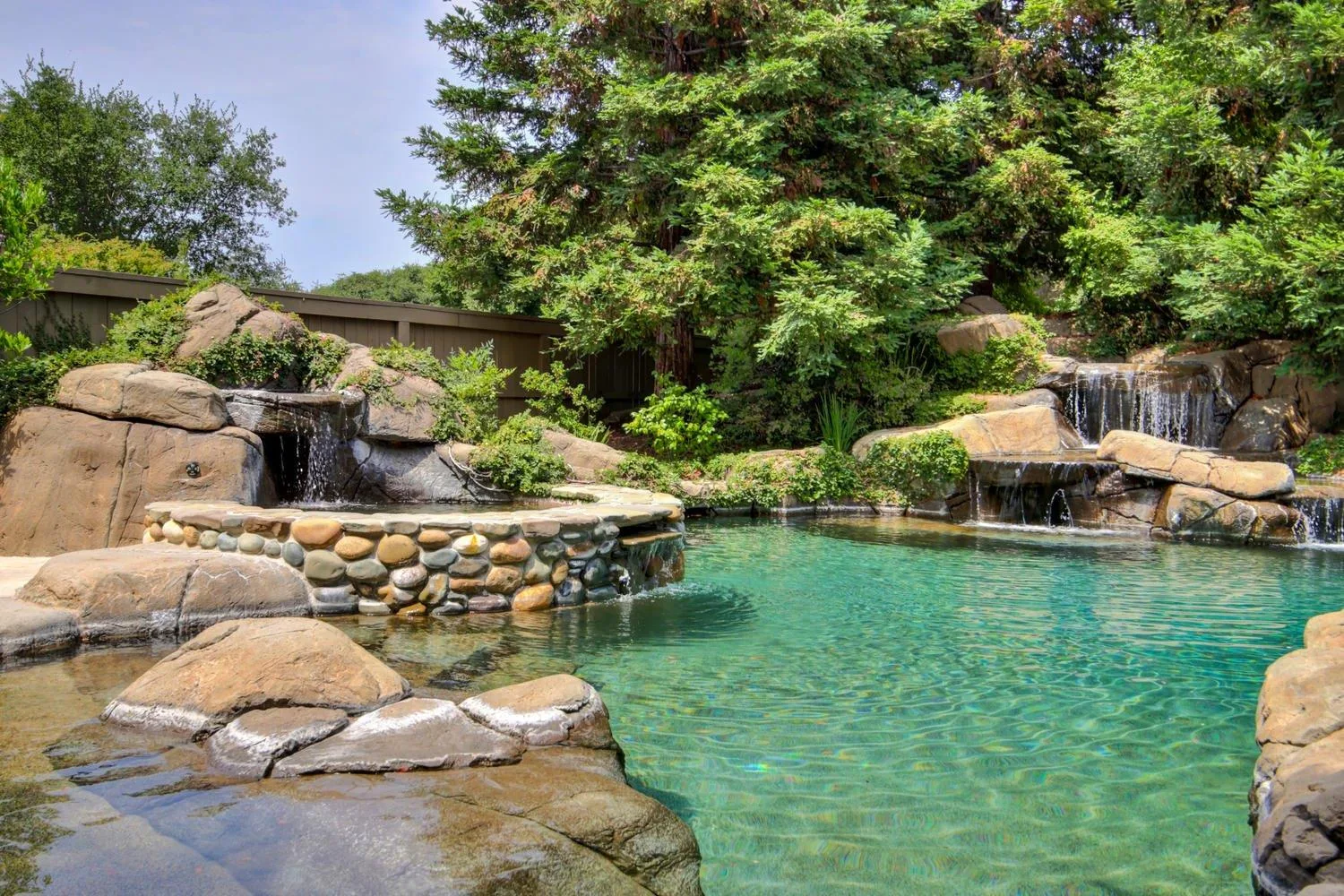
And the backyards deserve a mention of their own. Many are designed by the region's most talented and creative landscape architects, and honestly, some are just drop-dead, knock-your-socks-off, hope-I-get-invited-to-a-party-here stunning.
The Model Series, 3000 to 10000
Another of his ideas, one you have to wrap your head around, is that all the models are numbered by series: the 3000, 4000, 5000, 6000, 7000, 8000, 9000, and, of course, the 10000 series. Here's the tricky part: depending on the village, a 9000 series home could be 1,800 square feet, or 2,200, 2,800, 3,200, 3,800, or even 4,600. It's the same exact design, with the walls moved outward.
You might see a 2200-square-foot 9000 and a 2800-square-foot 9000 on the same visit, and the client will tell you "this feels like the last one, but it seems different". They are different. Every village was built to its own size range: some of the early villages came smaller, and the 10000 series, which is a big one at 4,800+ square feet, was only available in a couple of the highest end, premier villages.
Who Built the Villages
Powell built most of the villages here, I believe 17 or 18 of them. Bob Coker of Coker-Ewing, another prominent builder of the era, built 4; US Homes, a national subdivision builder, built 1; J&R, a regional builder, built 1; Greystone, an "opportunity" builder, built 1; and a small builder produced one tiny village of maybe 25 or so homes. Much later, they filled in a bare piece of land behind the town center, next to the club, with condos.
I mentioned the cult-like following of Powell homes earlier, and it's especially true in Gold River. I have clients who own a few homes there, and they've done very well with them, holding them as high-end, sought-after rentals while the equity gains pile up.
The Gold River Progression, and the Way Home
Watch how people actually move through this piece of town, because it runs like its own cycle: a lot of homeowners start in one of the smaller, less expensive, lighter-CC&R Coker or US Homes neighborhoods, then move up to a nicer, bigger Powell, then bigger still, a premier Powell neighborhood. As the kids start moving out, you've got it: they step back into a smaller Powell, and then, finally, into an easy-care, no-yard patio home, which Powell also built.
So for decades they never leave the Gold River hood, because they can't. And the other observation always makes me smile: I've seen people and clients move out to the latest hotspot, Serrano or Granite Bay, only to show up at my open house wanting to come home.

Why I'm (Happily) Biased
Steve's own history in the neighborhood
If this all sounds like bias, I am, for a good reason. I've sold a lot of homes in Gold River, written articles for the local magazine and its website, and lived there for over 25 years. I left to be with the love of my life, moving to another favorite neighborhood on the opposite side of the region, Morgan Creek. But I would move back to Gold River anytime, and I highly recommend it to anyone.
Single professionals, families, couples, and retirees all find quality living there, and they blend together in a friendly, active, outdoor, open-air lifestyle.
Typical Homes & Prices
What Your Money Buys
Typical Price Range
$700K – $1.2M
The broad market picture. Most homes run from $700,000 to $1,200,000, and the top of the market reaches about $3 million for the largest, best-located estates.
Typical Homes
Well-built 1980s and 1990s homes on generous, wooded lots: two-story traditional and contemporary styles, 1,700 to 5,000 square feet, with mature landscaping in nearly every yard. The crown jewels are the American River and the miles of walking and biking pathways along it.
Who It Suits
Professionals, singles, couples, families, seniors, and retirees will all find a great lifestyle here. Downtown Sacramento commuters get a welcome and an easier drive. So do people who want the best San Juan schools, because Gold River is in the San Juan School District, not Folsom Cordova. And anyone who wants an active lifestyle in a stable, valuable home investment.
The Practical Stuff
Commute, Schools & Everyday Life
Commute
Highway 50 is minutes away and downtown Sacramento is a rare short drive from a community this green, often well under half an hour. Office parks on Sunrise and in Folsom are even closer.
Schools
Gold River is in the San Juan Unified School District, and its top high school, Rio Americano, anchors the education story here. Your specific campus depends on the address, but the district's reputation and the community's involvement keep the school conversation an easy one for most buyers.
Everyday Life
The Gold River Racquet Club delivers tennis and all racquet sports, pools, a jacuzzi, workout facilities, classes, and a true gathering spot for the community's clubs. The Town Center delivers a variety of dining, shops, groceries, and everyday services. And the miles of wooded trail network tie the whole community together and lead to the American River, which is steps away.
Steve's Take
The honest assessment
What I Love
- 1. Gold River is the best close-knit, self-contained, friendly community in the region. Club amenities and mature trees at a price that undercuts Granite Bay and El Dorado Hills for the same quality lifestyle.
- 2. Gold River is close to everything! A great, short commute to downtown, which for an upscale neighborhood is rare. Fair Oaks is 5 minutes or a short walk, Folsom is 10. Even Roseville and the I-80 side of the Sac world is only 20 minutes, the Sierras an hour, Apple Hill a half hour, and shopping, both big box and small shop, is 2-10 minutes away.
- 3. It is established and not experimental. You can actually buy time here. No waiting for landscape, schools, or retail to develop and grow; the community is beautiful, finished, and proven.
- 4. The trail system is a gift. Being steps from the American River Parkway, Lake Natoma, and the Sac State Aquatic Center means every weekend has an adventure built in.
Honest Trade-Offs
- 1. The housing stock is getting genuinely older. Kitchens and baths from the 1990s are common, and the best value is often in the updating.
- 2. Homeowner dues and club memberships add up. The amenity lifestyle is not free, and the numbers need to be in your plan. However, this is one community where the HOA dues add value to the homes far above the cost. The neighborhood, villages, roads, and trails are always pristine and well kept. You will never have a neighbor paint any part of the exterior an odd color, or have junk, trailers, and broken-down cars out front. Front landscapes are always maintained, and security patrols 24 hours a day for a presence and deterrence. In the Powells, exterior painting every 4 years, and in some cases roofs, are included. ALL of this translates to stable and increasing home values that you can count on.
- 3. It is a smaller community with a narrower mix of homes. No custom homes and no acreage, except Powell's own home, which is a custom version of one of his models, the 6000, on a 2-acre lot. Most other lots are above average in size for a subdivision, and more private, by design.
- 4. Highway 50 and the Sunrise exit traffic still can be trying at peak times. Better than most commutes, never perfect, and there are ways around it.
Hidden Gems & Local Spots
Where Locals Actually Go
Quiet by design, Gold River's spots are the ones locals guard, plus a couple of neighborhood-adjacent favorites.
Il Forno Classico
This is THE spot to eat great food and unwind in Gold River. The locals gather at the friendly bar in the back with an excellent happy hour and snacks, while diners dig into pasta, pizzas, steaks, seafood, salads, 'best' burgers and more. Also the best wine and wine shop in the area.
Gold RiverMikuni Sushi
The OG and best sushi in the region... period.
Hazel Ave, Fair OaksZinfandel California Cuisine
Another locals gathering spot with a nice bar, big patio, and excellent food.
Gold Springs Court, Gold RiverThe Hidden Gem Locals Keep to Themselves
The American River right at your back door. The Gold River trailheads feed into the American River Parkway, and the Nimbus Fish Hatchery just up the river is a fascinating free stop for families. Locals walk, ride, and fish along those banks all year and never get tired of it.
Thinking About Gold River?
Let's Find Your Spot Along the River
Gold River sells out to repeat buyers and referrals for a reason. Tell me what you want from your next home and I will tell you whether this enclave is the match, or which neighbor deserves your Saturday instead.