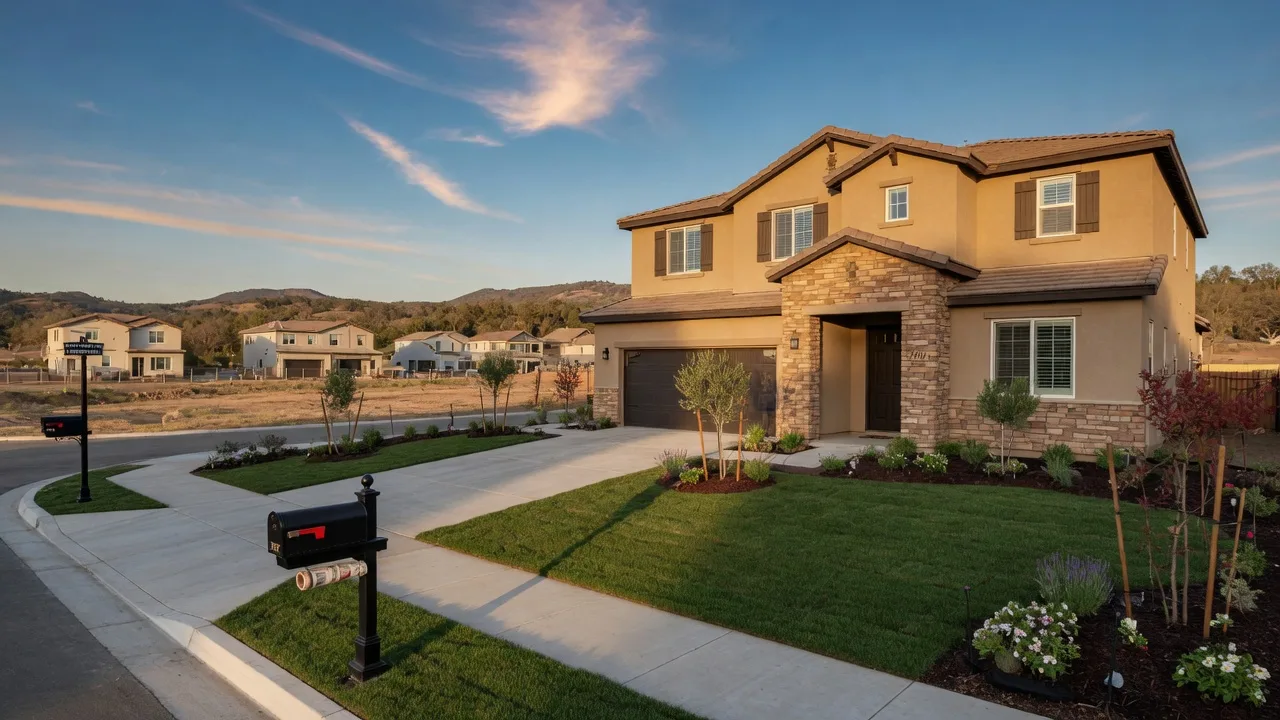
Let me show you the moment that costs people money. A family picks a new home in west Roseville or Folsom Ranch, the builder hands over a flyer with a monthly payment, everyone is happy, and then somewhere between the offer and the closing table the property tax bill walks in with a second line on it. That line is a Mello-Roos special tax, and in this region it usually runs $2,000 to $4,500 a year on top of the Prop 13 base, sometimes far more, and it can sit on the house for twenty to forty years. This post is the plain version: where it came from, what it costs around here, and the questions to ask before you sign anything.
The Second Bill Was There From the Start
California has a law from 1982, the Mello-Roos Act, and it lets a new community pay for its own public works before the neighborhood grows big enough to pay for them out of regular taxes. When a developer builds in a place with no roads, no sewer lines, no fire station, the math does not work any other way. So the property owners in the new district, or the landowner where nobody has moved in yet, vote to create a Community Facilities District, a CFD. The district sells bonds. The bonds pay for the streets, the water lines, the parks, the school sites, and the fire station. Then every parcel in the district pays a special tax that repays the bonds.
It takes a two-thirds vote to create one of these districts, which is a high bar, and in brand-new areas the landowner's approval stands in for the votes because there is nobody living there yet. The people who bought into the first phase effectively decided for the people who buy in phase six. That is how it works, and it is worth knowing before you call it unfair.
None of this shows up in the builder's flyer. The flyer shows the house at $849,000 and a payment with taxes and insurance already folded in. What it does not show is that part of that escrow number is a special tax that traces back to bonds sold years before, and that the number is fixed to the parcel, not the price.
What It Costs Around Here
Every CFD sets its own number, so there is no single price tag, but the ranges in this region are consistent. In Placer County, which covers Roseville, Rocklin, and Lincoln, special taxes on newer homes commonly run about $1,200 to $4,800 a year. In the newer Roseville master plans, Westpark, Fiddyment Farm, and Sierra Vista, the typical range is $2,000 to $4,500 a year. Down in Folsom Ranch in Folsom, the range runs roughly $1,500 to $4,500. The heaviest districts, the ones that financed the most up front, can push a special tax past $10,000 a year, and when that happens the total property tax bill lands at 1.8 to 2.8 percent of the home's value instead of the roughly 1 percent most people expect.
The Monthly Math
$2,000 a year is $167 a month. $3,000 a year is $250 a month. $4,500 a year is $375 a month. That sits on top of the payment the lender quoted, it is not optional, and it is not going anywhere for decades.
Most of the new homes carrying these taxes in this region price between the mid six figures and just over a million. At that level the special tax is the difference between a payment that works and a payment that does not, especially with two cars, two kids, and a summer camp bill already in the budget.
It Comes With the Parcel, Not the Person
The special tax is attached to the land, not to you. Buy the house and you take over the bill. Sell it and the next owner does too. It does not go away when the mortgage does, and it has nothing to do with what you paid for the house. Two neighbors in the same village can pay the same special tax on wildly different purchase prices, because the tax follows the parcel.
Most districts raise the special tax a little each year, often up to 2 percent, because that is how the bond payments are structured. And it is a tax. Skip it, and the county treats it the way it treats unpaid property taxes, which is to say seriously, with interest, penalties, and eventually the county's own claim on the house.
The Part That Hides in the Escrow
Here is how the bill disappears in plain sight. The special tax is usually collected through the mortgage escrow, so it folds into the taxes and insurance line of your monthly payment. The payment is the payment, and the reason it runs higher than the builder's flyer suggested is buried one level down in a number almost nobody splits apart.
One more thing to know: the tax does not shrink as you pay down the loan. It stays roughly flat, year after year, and then one day it stops, when the bonds are paid off. In this region the bonds usually run 20 to 40 years from when they were sold. Buy a house late in that window and the tax can roll off while you own it, which is a nice card to hold when you sell.
And a detail worth keeping: the part of the tax that paid for bonds has an end date. The part that pays for ongoing services, like a community's parks crew or street lights, can be written to last as long as the district exists. Ask which kind your district is.
Where the Second Bill Lives in This Region
A quick map of the places I see these taxes most, so you know what to look for when you open a listing.
West Roseville: Westpark, Fiddyment Farm, Sierra Vista
The newer master plans in and around west Roseville were built on CFD financing, and the special tax typically runs $2,000 to $4,500 a year. This is the most common place I pull the line out of a contract.
Folsom Ranch, Folsom
The big newer neighborhood at Folsom's south end, with homes ranging from starter models to large single-story plans. Special taxes here run roughly $1,500 to $4,500 a year depending on the phase and parcel.
Lincoln: Twelve Bridges, Sun City Lincoln Hills
Two big master plans built with Mello-Roos roads, bridges, and amenities. The taxes vary by village, so the same model home can carry different bills a mile apart.
El Dorado Hills: Serrano and newer builds
Serrano carries its own special tax on top of the HOA, sized by lot and home. Newer developments across El Dorado County can carry one as well, so ask before you admire the view.
The Disclosure Is Supposed to Come to You
Here is the fair part: California law requires the seller, and the builder on a new home, to hand you a written notice when a property sits in a CFD. The notice names the district, the current special tax, the maximum it can reach, and when the bonds mature. On a resale it comes with the escrow paperwork. On new construction it is usually one page deep in the stack they give you at the design center, which makes it the easiest thing in the world to miss.
Ask for that page before you write the offer, not after. You can also check it yourself in about two minutes: pull the current tax bill for the parcel from the county tax collector's website and look for the special tax line. I have done this in Placer, Sacramento, and El Dorado Counties more times than I can count, and it has never once surprised someone who asked for it first.
Five Questions to Ask Before You Offer
Take this list to the builder's office and to your lender. The answers take less than an afternoon, and they keep the closing table from holding any surprises.
01
What is the special tax on this exact parcel?
Not the neighborhood average, not the builder's brochure number. This parcel, this year.
02
What is the maximum it can rise to?
The district can usually raise the tax up to a stated cap. Know the cap and the annual escalator.
03
When do the bonds mature?
The tax ends at maturity, but ongoing services may not. Ask which part expires and which part stays.
04
What did this district pay for?
Schools, streets, parks, fire stations. Then ask whether it was delivered, because that is what your money bought.
05
What is my full monthly number with this tax inside it?
Make the lender quote escrow with the special tax included, then compare it to the builder's flyer payment out loud.
Or just bring me the address.
I pull the tax bill for any parcel in the three counties while we talk. It takes me less time than it takes you to find your keys.
Let's Run the Full Number Before You Fall for the House
I have priced homes and pulled tax bills in Westpark, Folsom Ranch, Twelve Bridges, and every CFD in between for 37 years. Thirty minutes on the phone and you will know what a house actually costs every month, including the lines the flyer leaves out. And if the math says this house is not for you, I will say that too.
Talk to you soon.