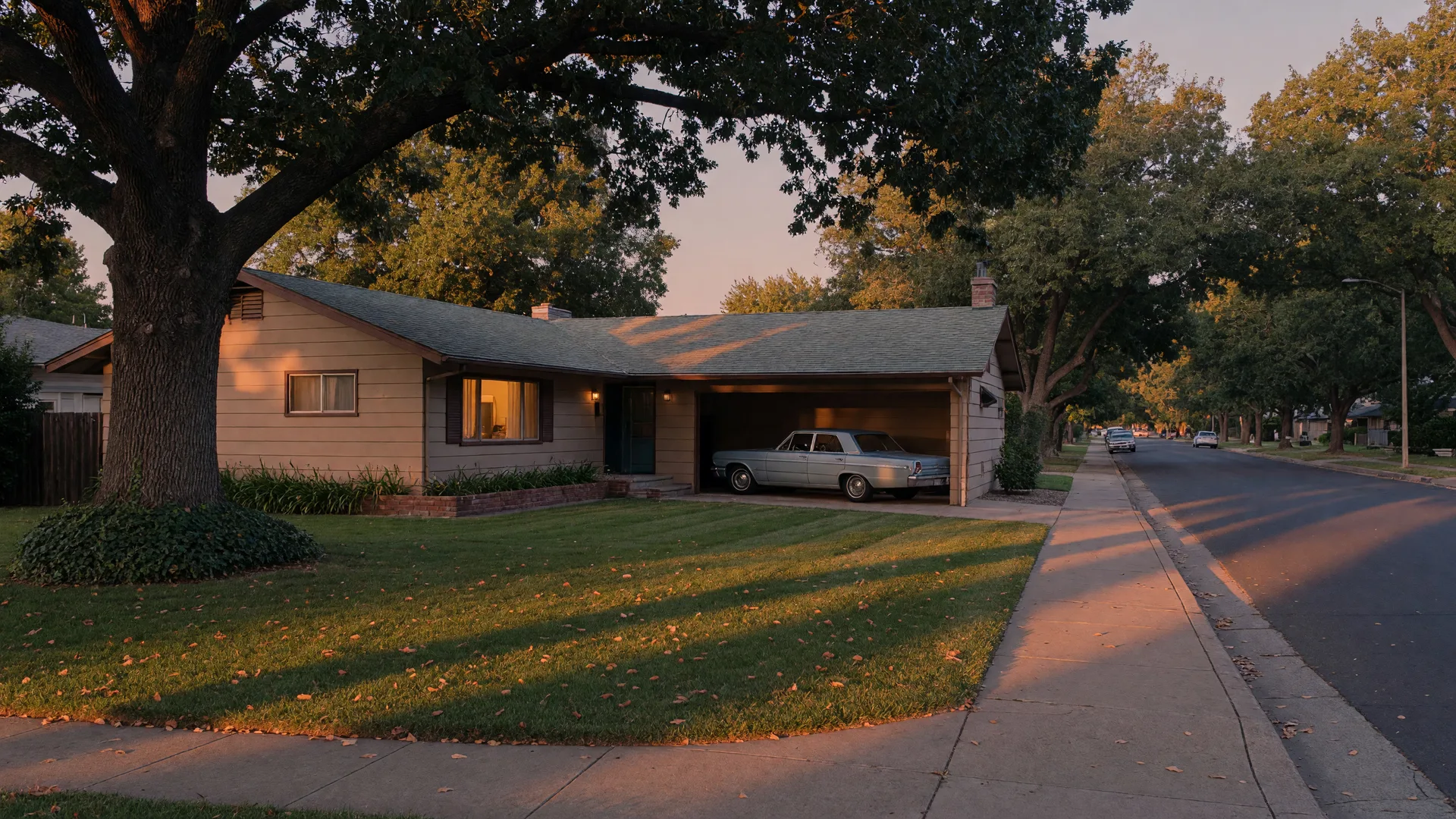
A parent passes, and suddenly the family home has no one to run it. I have walked dozens of families through this across Sacramento, Placer, and El Dorado Counties, and the same three questions come up every single time: does the house have to go through court, do we have to pay off the mortgage, and what happens to the taxes? This is the honest version of all three, written early enough to do you some good.
The First Question Is on the Deed
Before anything else, find the deed. The house itself tells you which path you are on. If your parents put the home in a revocable living trust, the person named as successor trustee can sell the house directly, with no court, no referee, and no hearing. It moves like a normal sale, and the family keeps moving with it.
If the home is in your parent's name alone with no trust, probate runs the show. The estate goes through the superior court of the county where they lived. A house in Roseville goes through Placer County. One in El Dorado Hills goes through El Dorado County, which means the courthouse up in Placerville. A house in Sacramento goes through the court downtown on 9th Street. You do not need to memorize any of that, but your attorney and your agent should live in the same county, because the paperwork and the hearings happen there.
There is a third path worth checking early. California allows a transfer on death deed, a beneficiary deed that names who gets the house and lets it pass with no court at all. These are easy to miss in a stack of papers, so have your lawyer or agent pull the title record in the first week.
Probate Runs on the Court's Clock, Not Yours
Probate is not a punishment, it is a process, and the process has a speed limit. Someone files the petition, form DE-111, and the court sets a hearing, usually four to eight weeks out. The executor is officially appointed after that hearing, with letters that say so. Nothing about the house can be sold until the executor holds those letters.
In a clean case, the appointment lands about four to six weeks after the death. The whole estate, from filing to final distribution, usually runs nine to eighteen months. Simple estates can close in four to six. Messy ones, the ones with a dispute between siblings or a fight over an old creditor, run past two years.
That is not a reason to panic. It is a reason to price and prepare the house like you mean it, because the court does not care how ready you are to be done with this.
An Appraiser the Court Picks Sets the Floor
A probate sale has one extra step a normal sale does not. A court appointed appraiser, called the probate referee, values the house, and California law says the home cannot sell for less than 90 percent of that number. The referee's figure sets your floor, and your pricing has to respect it, or the court will not approve the deal.
The practical upshot: your agent should read the referee's number against the current market before anything goes up for sale. You do not want to discover a gap at the hearing, because nobody enjoys a second trip before the judge.
The referee is not the same as a buyer's home inspection, and it is not a regular market appraisal. It is its own thing, with its own schedule, and it is one more reason probate sales reward someone who has done them before.
Strangers Can Bid in the Courtroom
Here is the part that surprises most families. Depending on the authority the court gives the executor, a signed offer may have to go back to a confirmation hearing, where a judge reviews the deal out loud. And at that hearing, another buyer can stand up and top it. The first overbid has to beat your accepted price by at least 5 percent plus $500. From there the bidders can go back and forth, and the judge picks the better deal for the estate.
That sounds scarier than it plays. Sales confirm in this region every week. But it means an offer needs to be written right the first time, and it means you want an agent who has sat in these hearings, because the courtroom has its own manners.
If the executor holds what the law calls full authority, the sale skips the confirmation hearing entirely. The beneficiaries still get a 15-day notice, and the deal can close in about 45 to 60 days, like a normal escrow. Which authority your executor holds changes your whole timeline, so ask for it in writing early.
You Do Not Have to Sell Just to Pay Off the Bank
The second question families ask, usually in the same breath as "do we have to sell?", is whether the mortgage comes due. The short answer is no, not because of the inheritance. A federal law, the Garn-St Germain Act from 1982, stops the lender from calling the loan due when a home passes to family by inheritance. A spouse or a child can keep the mortgage exactly where it is and keep making the payments. The lender cannot force a refinance.
Two catches. The protection follows relatives, so if the house was left to someone outside the family, the lender can enforce the due-on-sale clause. And the law only covers the transfer itself. Stop making payments and the foreclosure clock starts like any other mortgage. Nobody inherits the right to skip a payment.
So the mortgage alone should not force the decision. Whether to keep the house or sell it is a family and money question, not a bank question, and it deserves a calm hour with a calculator before anyone calls a realtor.
Here Comes the Tax Surprise
Now the piece that catches nearly everyone, because very few people hear it in the days after the funeral. California taxes a home at its value, and it can reassess when the house changes hands. Your parents paid taxes on what the house was worth decades ago, often a number that looks like a rounding error today. Inherit the home, and the county assessor can reset the bill to full current market value.
Proposition 19 changed the old rules that used to hand children a free pass. Today a child keeps the parent's old tax bill only if three things all line up: the house was the parent's primary residence, the child moves in within one year and makes it their own primary home, and someone files the claim with the county, form BOE-19-P. Meet all three, and an exclusion cushion, about $1.04 million above the old assessed value for the current two-year window, keeps the bill low.
Miss any part, especially the moving-in requirement, and the home reassesses to full market value. That matters in this region, where a house in Roseville or Folsom bought in the 1970s for a price that looks small next to today's median can now be worth many times that. If the plan is to sell the house rather than move into it, the tax bill resets to today's value, full stop.
And if the idea was to rent the place out and keep the low bill, this law closes that door too. Prop 19 ended the old break for second homes and rentals passed down to children. Talk to a property tax expert before you assume anything, because this is the one mistake families discover in April.
Take Care of the House While the Estate Works
While the court does its slow, steady work, an empty house is a losing house. Do these early, even before you decide whether to sell.
Order certified copies
Get at least ten certified copies of the death certificate. The court, the bank, the title company, and the county each want their own, and running out mid-process slows everything down.
Lock it up and check on it
Change the locks or confirm every door. Ask a neighbor or your agent to swing by every few days. A vacant house draws the wrong kind of attention, and a noticed house stays whole.
Verify the insurance
Call the current insurer and confirm the policy still covers the house. Most homeowner policies limit coverage once a home sits vacant for a stretch, and an empty house is exactly where a frozen pipe or a hidden roof leak does its damage.
Keep the lights on
Power is what keeps the plumbing, the showings, and the inspector's equipment working. A January freeze up in Granite Bay or Auburn with the heat off is how a small problem becomes a five-figure one.
Leave everything in place
Do not start hauling furniture or emptying closets before the executor sorts out what belongs to the estate. Well-meaning relatives have cleared a house of its value in a weekend, and that value belongs to everyone, not the fastest cousin.
The Part That Is Not in the Paperwork
The house is the last place your parents got to act like themselves. The garage that smells like Dad's sawdust. The kitchen where Mom made every birthday dinner. Probate will treat it like an asset, and you should not have to. I have walked with families who grieved in the living room of the house they were listing that same week, and the process can be gentle if the people running it are kind.
There is an old saying I lean on in deals like this: you know what you know, you know what you don't know, and you don't know what you don't know. Probate is full of that last bucket. My job is to carry the details, keep everyone informed, and let the family be a family while the paperwork moves.
If you are the one holding the questions, you do not have to solve them tonight, but you should solve them soon, because a house left to sit decides things on its own.
Let's Walk Through It Together
I have guided families through estate sales in all three counties for 37 years, and I know what the court, the referee, and the tax office will ask for. Tell me your situation and I will lay out the next three steps, what they cost, and what comes after. Thirty minutes on the calendar and you will feel the difference.
Talk to you soon.