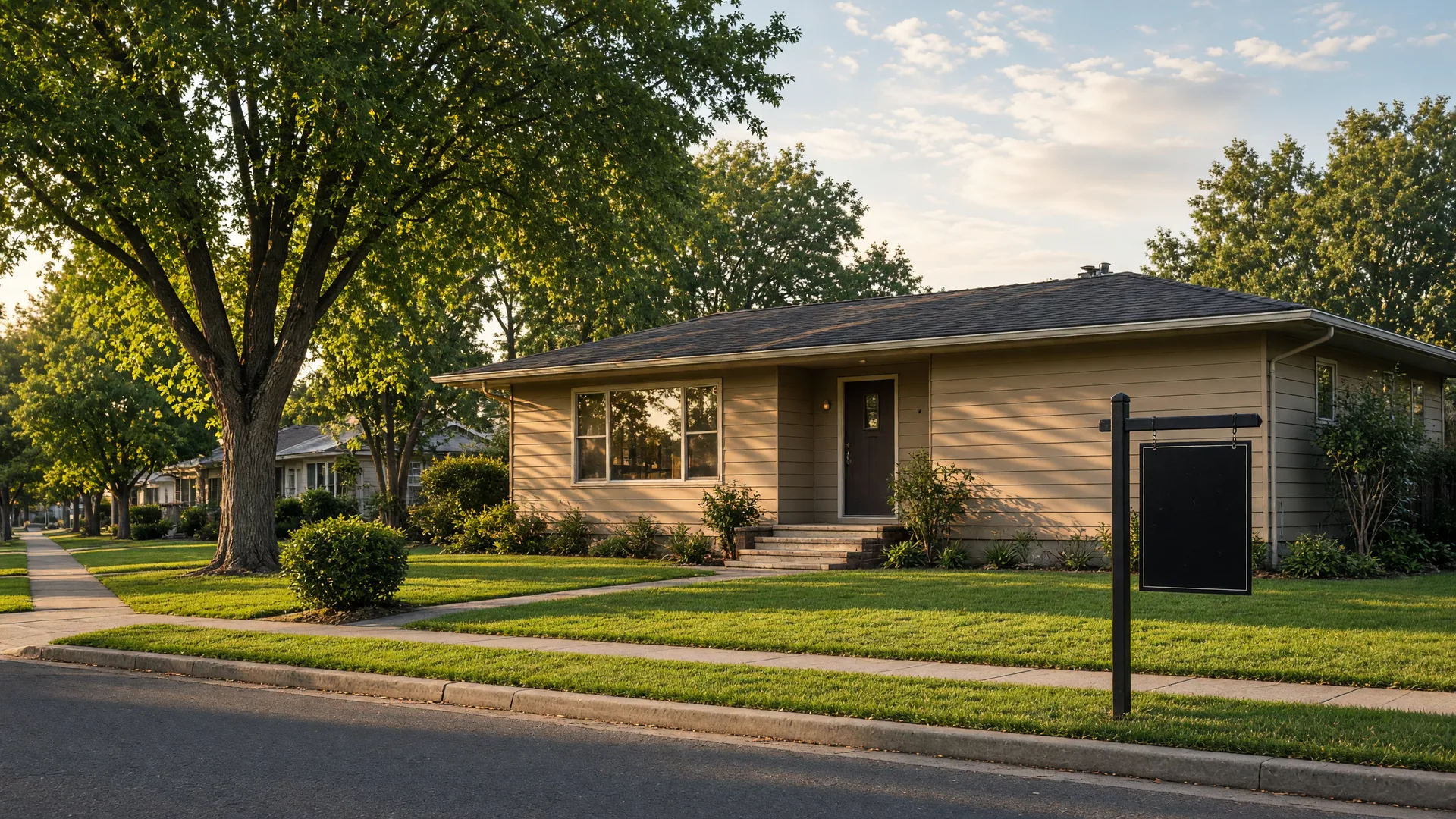
I've evaluated hundreds of thousands of properties over my career, and here's something that might surprise you: I can usually recognize a promising investment long before I walk through the front door.
By the time I visit, I've already researched the neighborhood, the property, the lot, the construction, permits, potential rents, likely resale values, and the seller's circumstances.
I've run the numbers.
The visit isn't where I discover the opportunity. It's where I determine whether the opportunity survives closer examination.
Because when it comes to investment real estate, there's one rule I never forget:
You don't have to love the property. You have to love the numbers.
A Bargain Isn't Necessarily an Opportunity
A property can be priced well below comparable homes and still be a terrible investment.
Why?
Because the purchase price is only one number in a much bigger equation.
There are renovation costs, financing, taxes, insurance, maintenance, vacancies, carrying costs, projected rental income, resale value, and the time required to accomplish your objective.
Every one of those numbers affects the others.
And the key isn't simply knowing which numbers to use. It's knowing whether your estimates are accurate enough to trust.
That's where experience matters.
After decades of evaluating properties throughout the Sacramento region, I can often recognize a potential opportunity quickly. Then I verify it with research and data before spending time visiting the property.
I want to know the realistic high and low values, what it might rent for, and whether the property fits the investment objective.
By the time I walk through the door, I'm usually looking for the unexpected problems that could change the equation.
Some Problems Are Fixable. Others Can Become a Career.
Let's say I'm evaluating a home that needs paint, flooring, kitchen updates, bathrooms, and landscaping.
Those are relatively predictable improvements. I can estimate the costs, determine the likely value after renovation, and calculate how long the work should take.
Now consider a property requiring significant structural changes, a redesigned floor plan, or major alterations to its systems.
That's a completely different proposition.
Once you start opening walls and making structural changes, unexpected problems can appear. Costs become harder to predict. Timelines stretch. And your capital remains tied up.
A straightforward renovation might take weeks. A complicated project can turn into a career.
And time matters.
If I can renovate, sell, or rent a property quickly, I can put that money back to work sooner.
An investment that appears to produce a large profit but takes far longer than expected may be less attractive than a simpler project with a smaller, more predictable return.
That's why I don't automatically get excited about a low asking price or a house with lots of potential.
Potential isn't profit.
Before You Buy, Know What You're Trying to Accomplish
One of the biggest mistakes an investor can make is looking for properties before deciding what the investment is supposed to do.
Are you trying to build long-term wealth?
Create income for retirement?
Or accomplish both?
Those are different goals, and they often lead to different properties.
I generally think about investment properties in three categories.
1. Building Equity
For a younger family planning for their children's education or building long-term financial security, equity growth might be the priority.
A single-family home in a desirable neighborhood could be a good fit.
The objective is to own a property with strong long-term appreciation potential while tenants contribute toward the mortgage and operating costs.
That property may not generate positive cash flow immediately. Depending on the purchase price, financing, and rental income, the owner may have to contribute money each month.
That's not automatically a bad investment.
But the expected equity growth, out-of-pocket costs, risks, and holding period must make sense together.
2. Generating Cash Flow
Someone approaching retirement may have a different objective.
Instead of concentrating primarily on appreciation, they may want dependable monthly income.
That can lead us toward properties with strong rental demand, including duplexes, fourplexes, and larger multifamily investments.
But here's something investors sometimes overlook:
The properties showing the highest projected income can also require the most management.
Higher tenant turnover, additional maintenance, vacancies, and more complicated tenant issues can consume time and money.
A property that looks wonderful on a spreadsheet may be considerably less wonderful when you're managing it.
That's why we consider property management expenses, even when an investor initially plans to manage the property personally.
The objective isn't simply to collect the most rent.
It's to produce income that makes sense after the expenses, work, and risks.
3. A Blend of Equity and Income
The third approach combines appreciation potential with cash flow.
A duplex or fourplex in a stronger neighborhood might offer attractive rental income while also providing the possibility of long-term equity growth.
These properties may cost more initially, but the combination of location, rental demand, tenant profile, and appreciation potential can make them appealing.
The right balance depends on the investor's finances, goals, and tolerance for risk and management responsibilities.
There's no single investment property that's right for everyone.
Two Numbers Every Investor Should Understand
When comparing income-producing properties, two useful measures are the Gross Rent Multiplier (GRM) and Capitalization Rate (Cap Rate).
GRM is a quick comparison of a property's price relative to its gross rental income.
A lower GRM can suggest a more attractive price relative to rent, but it doesn't account for operating expenses, financing, or property condition.
Cap rate goes further by comparing a property's annual net operating income with its value or purchase price.
That gives us a better picture of the property's operating return before financing costs.
Neither number tells the whole story.
Mortgage payments, taxes, insurance, maintenance, vacancies, repairs, future improvements, and the investor's individual financial circumstances still matter.
The numbers have to work together.
And I need to be confident that the numbers we're using are realistic.
Your Exit Strategy Starts Before Your Purchase
Every property I seriously consider should offer more than one potential exit.
But that doesn't mean I buy first and figure out what to do later.
It's exactly the opposite.
I decide what I want the investment to accomplish before I buy it.
A buy-and-hold rental may need only relatively modest improvements to make it attractive to tenants. We may be able to complete the work and begin collecting rent in weeks.
A property intended for renovation and resale requires a different level of preparation, investment, and marketing.
For a flip, I may target a substantial profit margin—often in the 20–30% range—but that target is never a guarantee. It has to be supported by the purchase price, realistic costs, timing, and market conditions.
The investment objective determines which properties I pursue and what I'm willing to pay.
And if circumstances change, having another financially viable option can make an enormous difference.
Think Several Moves Ahead
Real estate investing isn't necessarily about buying one property and keeping it forever.
Consider a younger investor who begins by acquiring properties primarily for long-term equity growth.
Over time, those properties may appreciate and their mortgage balances may decline.
Later, the investor might decide that income has become more important than additional appreciation.
One possible strategy is to sell an investment property and use a qualifying 1031 exchange to defer certain capital-gains taxes while acquiring another investment property better suited to producing income.
Eventually, that investor might exchange into properties offering a more comfortable blend of income, appreciation potential, and manageable responsibilities.
That's just one example.
A 1031 exchange has specific rules, deadlines, and tax consequences, so it requires planning with qualified tax and legal professionals.
The larger point is that a good investment strategy can evolve as your life changes.
The property you need at 35 may be very different from the property you want at 65.
My Bottom Line
I've seen enough properties to know that a low price doesn't automatically mean a bargain, a beautiful remodel doesn't automatically mean profit, and a complicated project doesn't automatically become worthwhile because someone thinks it has potential.
The neighborhood matters. The property matters. The condition matters.
But only because they affect the investment numbers.
Before I ever visit a property, I want to understand the opportunity, the risks, and the likely financial result.
Before I buy, I want to know the objective, the costs, the timeframe, and the exit strategy.
You don't need to fall in love with an investment property. You need to love the numbers.
And there are a lot of ways to make those numbers work—if you know where to look, what to avoid, and how to plan ahead.
So many options, so little time to tell you about them all.
Thinking about investing in real estate? Let's talk about your goals and find out what the numbers say.
Let's Talk About Your Investment Goals
You don't need to fall in love with an investment property. You need to love the numbers. I'll help you understand the opportunity, the risks, and the likely financial result before you commit.
Talk to you soon.